Risk-mapped planning
Define the facility, contamination concern, operating constraints, and evidence requirement before selecting a method.
 Request a Consultation
EDF-E connects risk assessment, controlled delivery formats, imaging verification, and documented closeout for high-consequence facilities. Electrostatic equipment and DF-200 chemistry are selected as connected layers within the system.

EDF-E is the enterprise operating system for high-consequence decontamination: assess the risk, design controlled delivery, verify the work, and document the closeout. The equipment and chemistry layers that follow are selected inside that response plan—not used as stand-alone substitutes for it.
Define the facility, contamination concern, operating constraints, and evidence requirement before selecting a method.
Build zone controls, access, ventilation, operator workflow, and a facility-specific application pathway.
Use fluorescence imaging and documented observations to support a defensible treatment record.
Foam, fog, mist, liquid, mop, foot bath, soaking, and electrostatic spray let EDF-E match an application method to the site plan.
A separate development-stage delivery architecture for controlled-pattern evaluation.
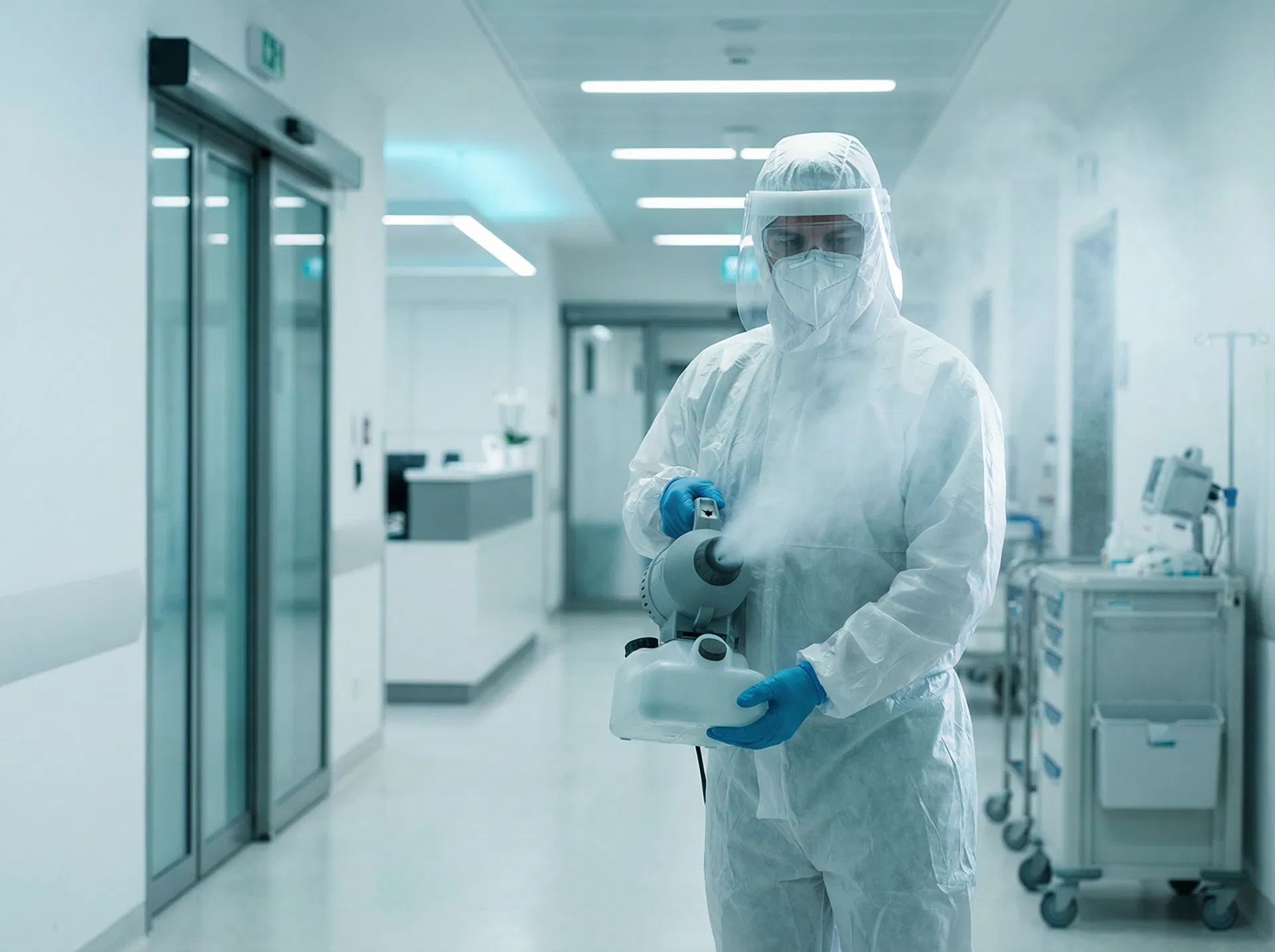
EDF-E response planning begins with the operational environment, target surfaces, facility controls, current product documentation, and the level of verification required. The application path is selected to fit that context—not assumed from an image or a generic treatment model.

Outbreak response, vessel sanitation programs, and documented decontamination for marine operations.
Explore the deployment path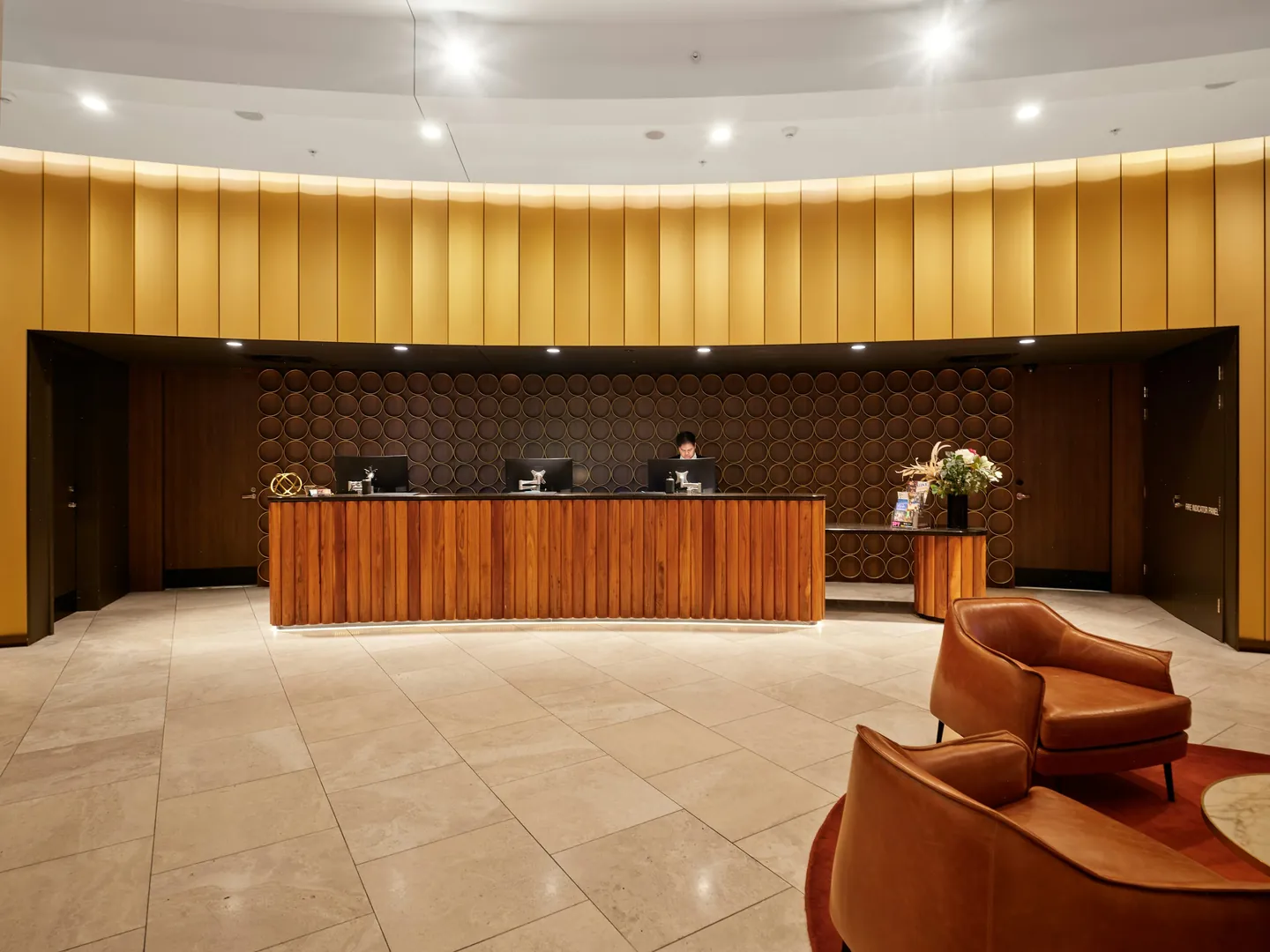
Whole-property deployment planning, guest-area response, and franchise documentation support.
Explore the deployment pathInfection-control support for high-risk areas, with documentation pathways for operations teams.
Explore the deployment pathDecontamination support for food-contact and operational environments where downtime and documentation matter.
Explore the deployment pathRapid response planning for high-consequence biological contamination and critical incidents.
Explore the deployment path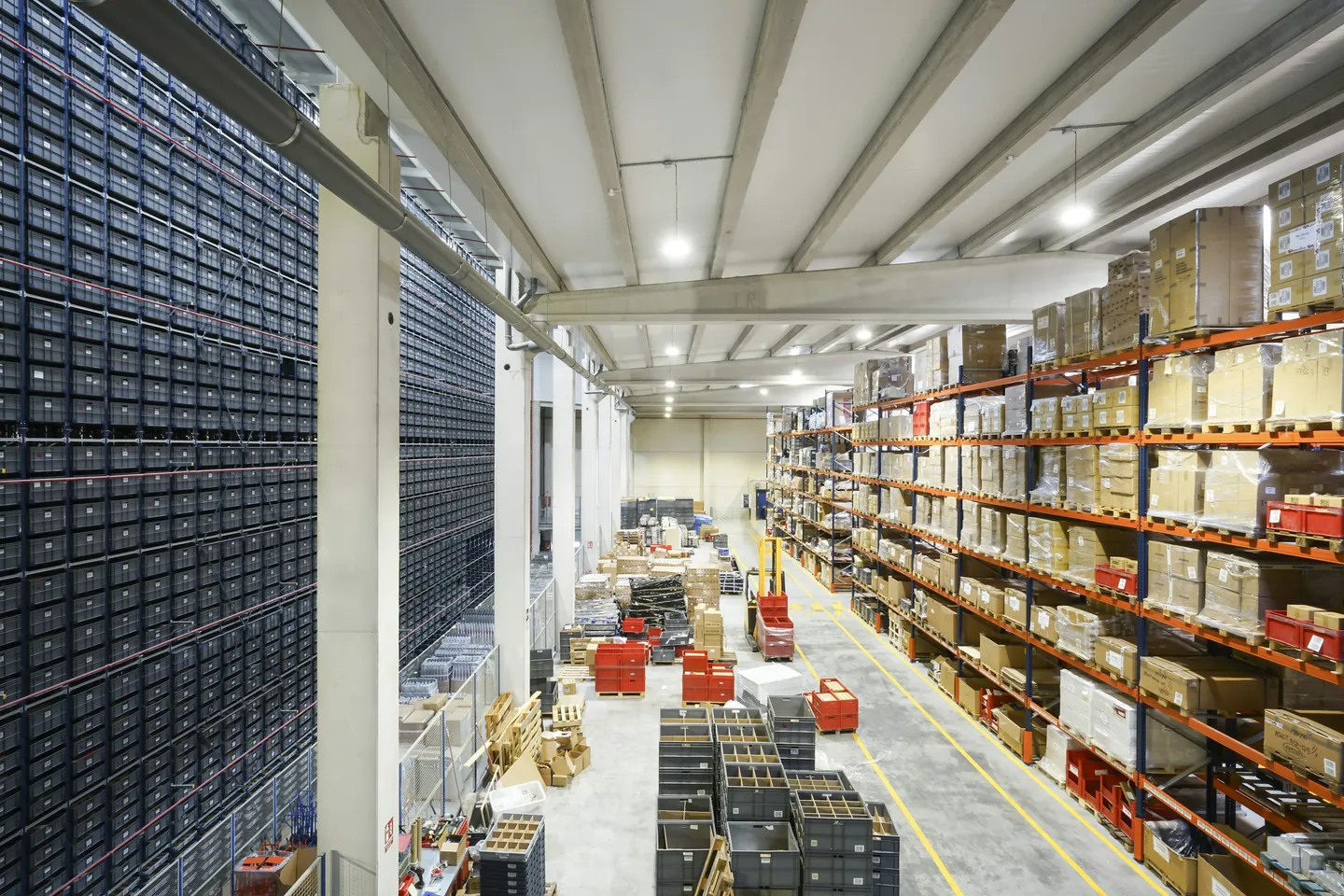
Whole-facility decontamination, HVAC-adjacent risk investigations, and contamination verification.
Explore the deployment pathRisk, controls, application planning, verification, and records are designed as one operating response.
Select the delivery pathway around the facility plan—not around a one-size-fits-all spray method.
Fluorescence imaging helps map contamination and verify treatment zones.
Engagement records support operational, compliance, insurer, and legal needs.
Foam, fog, mist, liquid, mop, foot bath, soaking, and electrostatic spray are EDF-E application pathways selected around the facility, target surfaces, operating controls, current product documentation, and response objective.
A controlled application pathway for complex or vertical surfaces when clinging coverage is appropriate to the facility plan.
A dispersion pathway considered for defined spaces and operating conditions under the applicable product and ventilation requirements.
A measured application pathway for surface coverage where droplet selection and reach must be planned around the target environment.
A direct wet-application pathway for defined surfaces, equipment, or zones where the deployment plan calls for liquid coverage.
A manual application pathway for floors, touchpoints, and focused surface work where precision and access control matter.
An ingress and egress hygiene pathway configured around the site protocol, formulation requirements, and operational controls.
A targeted immersion pathway for compatible components or equipment when the specific material and process plan permit it.
A charged-droplet application pathway using compatible electrostatic sprayer equipment when the site, current product label, treatment objective, and operating controls support its use.
Method selection is facility-specific. EnviroDeconForce technical direction, current label requirements, material compatibility, environmental conditions, and operational controls determine whether and how a format is used.
ForceArray is the EDF development-stage delivery module: a fourteen-outlet concept designed around three coordinated rails, balanced flow paths, modular service, and pressure-safe control. It is not a replacement for the platform’s eight application formats—it is a separate architecture for measuring and refining a controlled delivery pattern.
Fourteen indexed discharge points are staged across three coordinated rails to support controlled overlap and target-plane tuning.
A centrally fed plenum and controlled flow paths are designed to reduce rail-to-rail and station-to-station variation.
Removable rails and keyed cartridges are designed to return to defined depth and orientation after inspection or replacement.
Isolation, controlled depressurization, near-head pressure measurement, and filtration are part of the development architecture.
Each mode requires liquid-, pressure-, nozzle-, distance-, and environment-specific validation before any application recommendation or performance statement.
Development-stage qualification: ForceArray 545 renderings are illustrative. Pressure ratings, chemical compatibility, safety functions, droplet distributions, deposition performance, durability, ergonomics, certifications, and efficacy remain subject to engineering verification and application-specific validation.
EDF ELECTROSTATIC SYSTEMS
Electrostatic SprayEDF delivery format 08EDF electrostatic systems for facility, agricultural, and post-harvest work—organized around real application inputs, practical selection criteria, and the equipment details teams need to select confidently.
 EDF SERIES
Choose the operating environment first. Then compare format, power or compressor needs, operator workflow, target liquid, and the documentation needed to move toward a considered configuration.

Compare portable, wheeled, wearable, and compressor-dependent formats against access, refill workflow, and operating context.

Explore equipment formats for crop, greenhouse, nursery, and growing-environment application work.

Explore process and line-integration equipment for post-harvest and production environments.
Use the demonstration media to understand application formats and operator workflow. Equipment selection, liquid selection, label requirements, and site controls must still be confirmed for the intended work.
A visual overview of charged-droplet application behavior. Demonstration media does not establish efficacy, coverage, or a permitted use.
See a compact wheeled configuration in use and bring the operating context to your EDF equipment conversation.
See a wearable format in action when operator movement and access are central to the work plan.
Explore each EDF system by application, format, core reference details, and the operating context that matters to your team.
 EDF SERIES
A wheeled electric system for facility teams that need a durable, practical work partner.
A compact wheeled format for practical, mobile facility application work.
A mobile battery-format system for jobs where outlet access is limited.
A portable system for professional workflows with compressed-air capability.
EDF SERIESA battery-powered wheeled system for structured facility deployment.
 EDF SERIES
A wearable battery-powered format for operators who need freedom of movement.
A compact format for focused professional application work.
A portable case-format system for flexible professional application work.
An agricultural system for crop and growing-environment applications.
An agricultural format for workflows with available compressed air.
A post-harvest system for processing and line-integration environments.
Electrostatic equipment applies a charge to liquid droplets with the goal of improving surface deposition. It does not replace the chemistry label, wet contact time, ventilation, operator technique, or training needed for an appropriate application.
Tell EDF what you are applying, where the work happens, whether power or compressed air is available, and what your procurement team needs to see. We will use those inputs to help you select equipment and provide the right product information.
After the EDF-E system and equipment path are defined, DF-200 provides the three-part chemistry layer for approved applications, aligned with the current product label, site controls, verification, and documentation.
Breaks down the biofilm matrix that protects pathogens on hard surfaces, exposing contamination that standard disinfectants may not reach.
Targets viral proteins, bacterial cell walls, and fungal spores after the protective biofilm barrier is disrupted.
Amplifies the oxidation process and completes the three-part system designed for high-consequence decontamination environments.
Technical data must be matched to the facility, application method, and current product documentation.
| Pathogen | Category | DF-200 chemistry reference | EDF-E operational relevance |
|---|---|---|---|
| Norovirus | Non-enveloped virus | Technical documentation available | Cruise and resort GI outbreak response |
| SARS-CoV-2 | Enveloped virus | EPA registration reference | Reopening and response protocols |
| Influenza A/B | Enveloped virus | EPA registration reference | Seasonal hospitality and facility response |
| MRSA | Gram-positive bacteria | Technical documentation available | Healthcare, fitness, and spa settings |
| C. difficile | Bacterial spore | Technical documentation available | Healthcare infection-control environments |
| Bacillus anthracis | Bacterial spore | DoD validation reference | Original high-resistance design context |
EPA registration information, product-label requirements, and full supporting documentation should be reviewed for each proposed use case.
Download the technical specification sheet for an overview of the chemistry, field documentation, and procurement discussion points.
Tell us about your facility, operational concern, or planned program. We will help map an appropriate deployment and documentation path.


